A material list is useful because it simplifies a project. That simplification also creates risk: one total can hide duplicated geometry, a wrong member size or a detail that has not yet been modeled.
Keep the list connected to objects
When quantities come from organized project objects, an unexpected total becomes a question you can investigate. Isolate the related group, inspect dimensions and decide whether the model or the expectation needs to change.
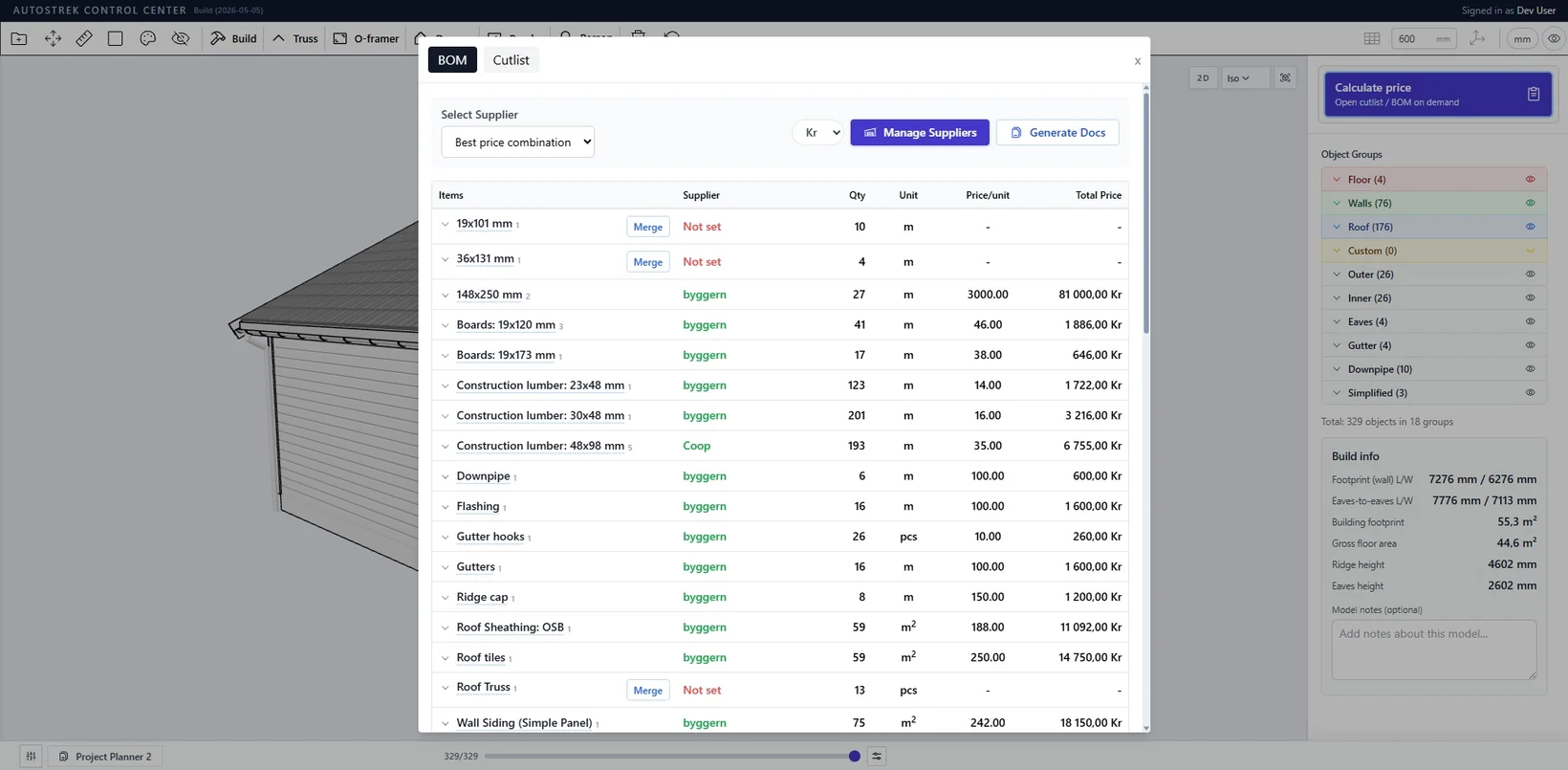
The list should remain an entry point back into the project rather than a dead export.
Stock is different from cut length
Exact part lengths do not automatically describe the stock you should purchase. Available lengths, cutting allowance, waste, defects and delivery constraints all affect an order. Good software can organize the input, but the purchasing decision still belongs to the builder.
Prices have a date and a source
Supplier price lists make early comparisons possible, especially when the same project can be evaluated against more than one source. Always confirm the unit, package quantity and effective date before treating a comparison as a final purchasing price.
The most reliable workflow combines a detailed model, a readable material list and a deliberate final check.